Tucson water guide
How hard is
Tucson water?
Short answer: very. Tucson-area water typically runs 18 to 25 grains per gallon — well past the point where the water industry calls it "very hard." Here's what that number means for your home.
The scale
Where Tucson lands on the hardness scale.
| Grains per gallon | Classification |
|---|---|
| 0 – 1 | Soft |
| 1 – 3.5 | Slightly hard |
| 3.5 – 7 | Moderately hard |
| 7 – 10.5 | Hard |
| 10.5 and above | Very hard |
| 18 – 25 | Typical Tucson metro |
Hardness varies by neighborhood and by source. Homes on private wells in Marana and Vail can read differently.
Beyond hardness
What’s actually in Tucson’s tap water.
Hardness is the part you can see. The Environmental Working Group compiles utility and state testing records for City of Tucson water, and their report lists several contaminants detected above EWG’s own health guidelines — even though the utility passes federal standards. Those numbers are pulled live from EWG below.
Tap the beside any contaminant for what it is, where it comes from, and what its units mean. Everything here is within federal legal limits — legal is not the same as the level EWG considers safe.
Arsenic
- Detected
- 2.04 ppb
- EWG guideline
- 0.004 ppb
- Legal limit
- 10 ppb
Haloacetic acids (HAA9)
- Detected
- 3.93 ppb
- EWG guideline
- 0.06 ppb
- Legal limit
- No legal limit
Total trihalomethanes (TTHMs)
- Detected
- 9.39 ppb
- EWG guideline
- 0.15 ppb
- Legal limit
- 80 ppb
Dibromochloromethane
- Detected
- 3.52 ppb
- EWG guideline
- 0.1 ppb
- Legal limit
- No legal limit
Bromodichloromethane
- Detected
- 1.94 ppb
- EWG guideline
- 0.06 ppb
- Legal limit
- No legal limit
Chromium (hexavalent)
- Detected
- 0.649 ppb
- EWG guideline
- 0.02 ppb
- Legal limit
- No legal limit
Nitrate
- Detected
- 1.68 ppm
- EWG guideline
- 0.14 ppm
- Legal limit
- 10 ppm
Bromoform
- Detected
- 3.36 ppb
- EWG guideline
- 0.5 ppb
- Legal limit
- No legal limit
Haloacetic acids (HAA5)
- Detected
- 0.621 ppb
- EWG guideline
- 0.1 ppb
- Legal limit
- 60 ppb
Uranium
- Detected
- 2.23 pCi/L
- EWG guideline
- 0.43 pCi/L
- Legal limit
- 20 pCi/L
Source: EWG Tap Water Database — City of Tucson. Data compiled by the Environmental Working Group from state and utility testing records. Last updated on this page August 13, 2026. Honest Water Solutions is not affiliated with EWG.
A softener handles the hardness. For the chlorination byproducts, arsenic, and nitrate on this list, a reverse osmosis drinking system at the kitchen sink is the piece that matters — which is why our Complete Home System pairs the two.
What it costs you
What hard water does to an Arizona home.
Water heaters
Scale settles at the bottom of the tank and insulates the burner or element, so the heater works harder and fails earlier. Tankless units are even more sensitive and often require descaling.
Fixtures and glass
The white crust on shower doors, faucet aerators, and shower heads is calcium left behind after water evaporates. It comes back no matter how often you scrub.
Laundry and dishes
Hard water reacts with soap instead of lathering, so clothes come out stiff and dishes come out spotted, even with more detergent.
Skin and hair
Soap scum does not rinse away cleanly in hard water, which is why many Tucson residents describe dry skin and dull hair after moving here.
The fix
A softener removes the mineral, not just the symptom.
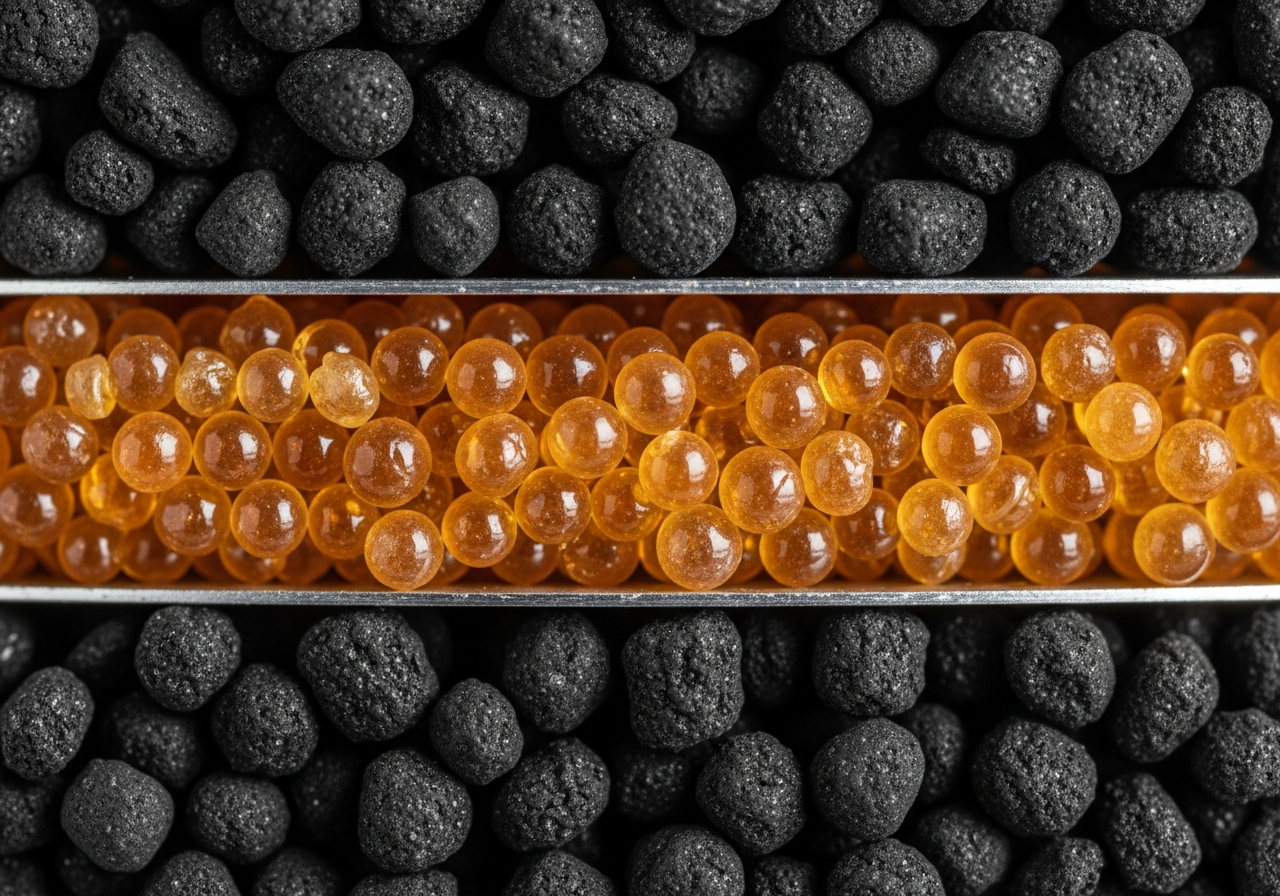
A whole-home softener runs your water through resin that exchanges calcium and magnesium for sodium or potassium. The hardness leaves the water, so scale stops forming anywhere downstream — heater, pipes, fixtures, and appliances.
Softening does not make water taste better, so most Tucson homes pair it with a reverse osmosis drinking system at the kitchen sink.
Compare our whole-home systemsCommon questions
Tucson hard water, answered.
How hard is Tucson water?
Tucson-area water typically tests around 18 to 25 grains per gallon. Anything above 10.5 grains per gallon is classified as very hard, so Tucson sits near the top of that scale.
What does grains per gallon actually mean?
Grains per gallon (GPG) measures dissolved calcium and magnesium. One grain per gallon equals about 17.1 parts per million. At 20 GPG, roughly a third of a pound of mineral passes through your plumbing for every 100 gallons you use.
Does hard water damage anything?
It does not harm your health, but it shortens the life of water heaters, builds scale inside pipes and fixtures, spots glass and stainless, and makes soap and detergent far less effective.
Is a water softener worth it in Tucson?
At 18 to 25 grains per gallon, most Tucson households see the difference immediately in showers, laundry, and glassware, and recover a meaningful part of the cost through longer appliance life and less soap and detergent use.